Use the website guidance and free tools now. Books and guides by Elfar Bridge will be added with their descriptions, practical benefits and bookshop links.
Books and guides written by Elfar Bridge will appear here. Titles, descriptions and links will be added when supplied by the author.
Elfar Bridge books and guides
Scholarship application checklist: what to prepare and when
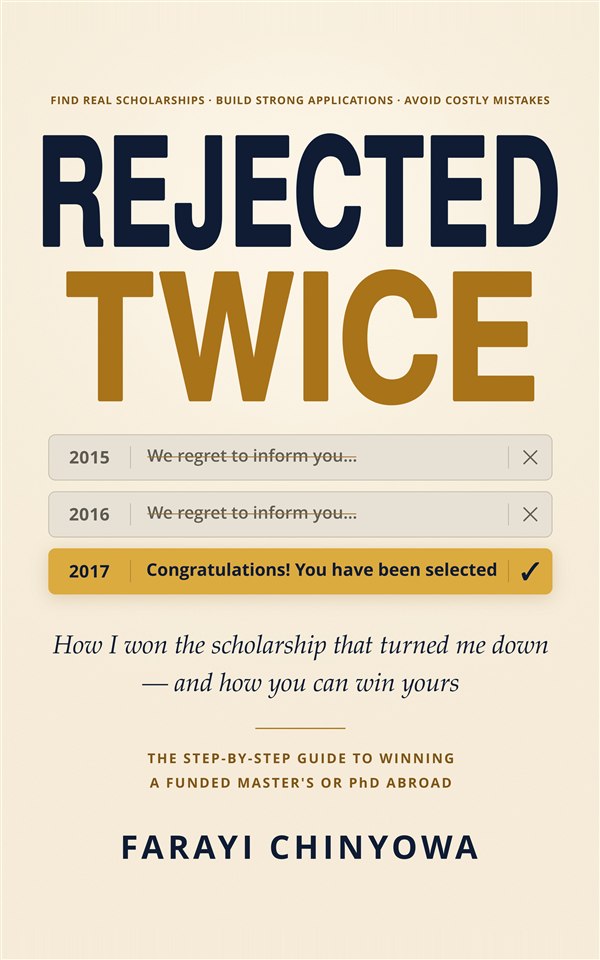
Rejected Twice
Farayi Chinyowa
How I Won the Scholarship That Turned Me Down — and How You Can Win Yours. Drawing on his experience of two rejections before receiving a scholarship, Farayi Chinyowa explains how to research genuine funding, understand eligibility and prepare evidence-based applications for study abroad. The guide covers scholarship CVs, motivation letters, essays, references, research proposals, interviews and the decisions that follow an offer. A twelve-month preparation plan and a practical scholarship toolkit help readers organise the process and learn from setbacks. Scholarship rules and funding change: always check the current official call. This independent educational guide does not guarantee an award or replace professional legal, immigration or financial advice.
What this will help you do
Find opportunities through official sources and recognise warning signs of scholarship scams.
Separate hard eligibility rules from selection factors and match awards to your profile.
Check what funding actually covers and identify costs you may still need to meet.
Prepare truthful CVs, motivation letters, essays, references and research proposals.
Organise documents, deadlines and interview preparation with a twelve-month plan and toolkit.
Review offers carefully, prepare for study abroad and turn rejection into a clearer next application.
How to write a CV that gets past screening — and impresses people
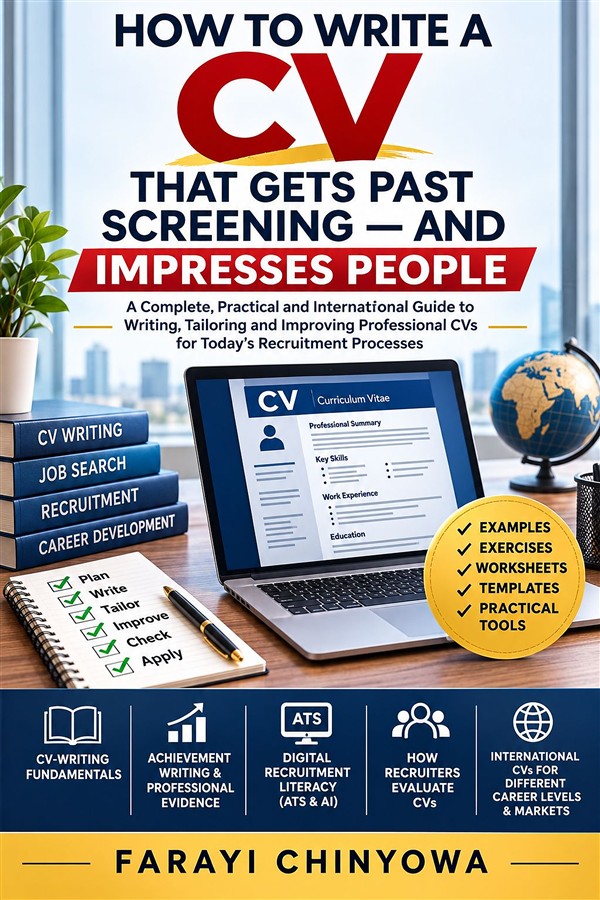
How to Write a CV That Gets Past Screening — and Impresses People
Farayi Chinyowa
A practical, international guide to building a professional CV from your real experience. Farayi Chinyowa’s Evidence-First CV Method takes you through collecting evidence, checking your claims, selecting what matters for a vacancy, writing clearly and testing the finished document. Worked examples, exercises, worksheets and six fill-in templates help you turn duties into credible achievements, tailor applications and make your CV easier for screening software and people to read. The book also covers different career stages, international applications and responsible AI use. It does not promise interviews or employment.
What this will help you do
Build a private Evidence Bank and write claims you can explain and verify.
Turn duties into clear achievement statements without inventing results or numbers.
Tailor your profile, skills and experience to the requirements of a specific vacancy.
Check layout, reading order and file quality for ATS compatibility and human readers.
Adapt your CV to a career change or international application using country-specific checks.
Practise with model CVs, six templates, worksheets and a 100-point self-review.
The motivation letter structure that selection panels remember
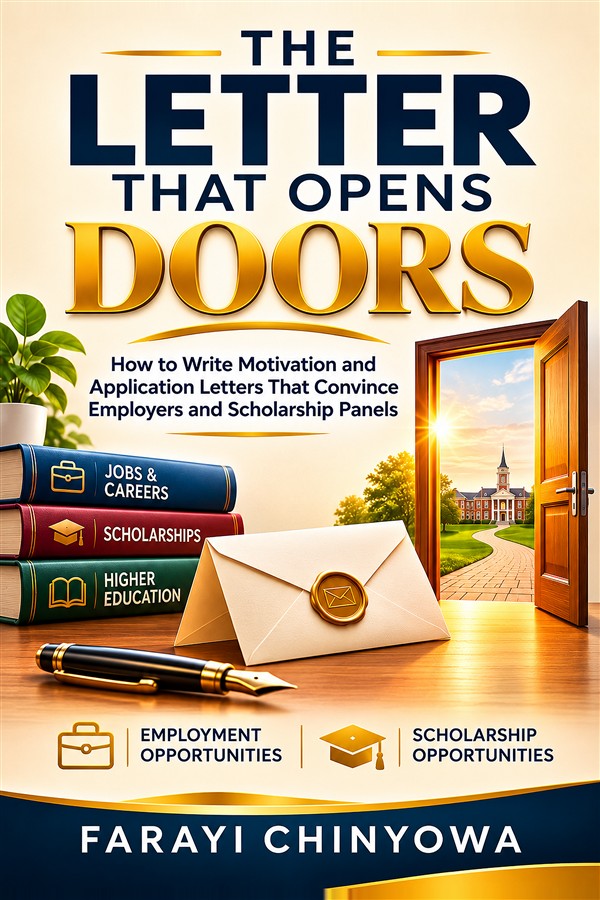
The Letter That Opens Doors
Farayi Chinyowa
How to Write Motivation and Application Letters That Convince Employers and Scholarship Panels. This practical guide helps you turn your real experience into a clear, relevant case for a job, scholarship or funded study opportunity. Farayi Chinyowa’s CLEAR method connects Context, Link, Evidence, Alignment and Resulting contribution, while treating employment and academic applications as distinct tasks. Worked letters, statements, before-and-after examples and planning worksheets show how to respond to selection criteria in your own voice. A 100-point review rubric and a 21-day practice plan support careful revision. No letter can guarantee a job or scholarship.
What this will help you do
Identify the document, selection criteria and length the employer or scholarship actually requires.
Use the CLEAR method to plan a specific argument instead of a generic introduction.
Connect truthful examples to each requirement without inventing experience or results.
Distinguish job cover letters from scholarship motivation letters, statements and essays.
Adapt your writing for international applications and use AI responsibly without losing your own voice.
Practise with annotated examples, worksheets, a 100-point rubric and a 21-day plan.
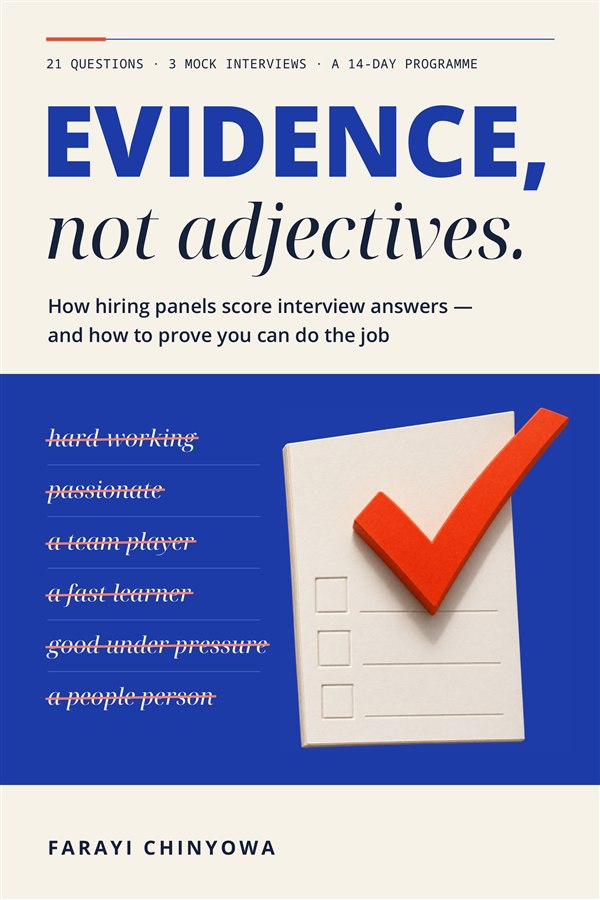
How Hiring Panels Score Interview Answers — and How to Prove You Can Do the Job. For first-time applicants through to senior leaders, this guide explains what a structured interview panel can score and how to turn real experience into evidence. It works through 21 common questions, comparing a typical answer with a stronger one and explaining what changed. Worksheets, three mock interviews and a 14-day preparation programme help you practise in your own words, without inventing metrics or memorising scripts.
What this will help you do
Understand what panels look for in competency and behavioural interviews.
Choose when to use STAR, PREP or the Pyramid framework to structure an answer.
Show credible results without exaggerating or making up numbers.
Prepare for questions about gaps and failures, executive and virtual interviews, and salary conversations.
Build a practice routine with worksheets, three mock interviews and a 14-day plan.
Answer any interview question with the STAR method
The Interview Craft Collection
Farayi Chinyowa
Ten practical interview guides, from your opening introduction and STAR evidence to difficult questions, employer-specific preparation and offer discussions. Choose the guide that addresses your next challenge, or work through the collection to build a preparation routine based on your own truthful experience. These are educational guides, not scripts to copy or a guarantee of an interview or job offer.
What this will help you do
Understand the question, build your evidence, shape your answer and practise the delivery.
Prepare clear, relevant examples and use exercises, checklists and readiness assessments to improve.
Choose from all ten guides below; individual bookshop links will be added when supplied.
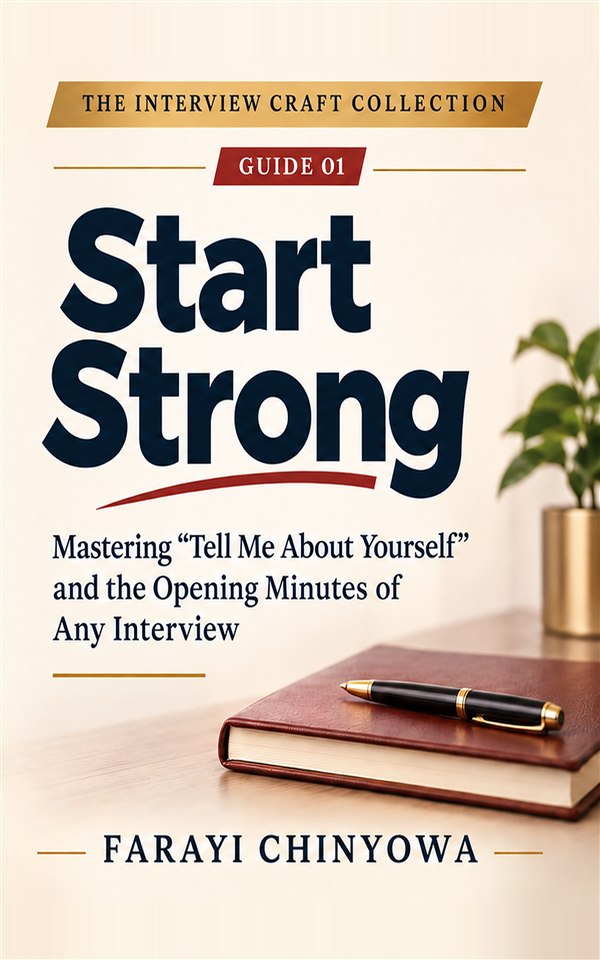
Mastering "Tell Me About Yourself" and the Opening Minutes of Any Interview
Build a relevant introduction that connects your real experience to the role, rather than reciting your entire CV. Practise different lengths and adapt your opening to your career stage and interview format.
What this will help you do
Prepare 30-second, 60-second and two-minute introductions.
Select truthful evidence that matters for a specific vacancy.
Rehearse aloud with exercises, a readiness scorecard and a 14-day plan.
Book link to be added
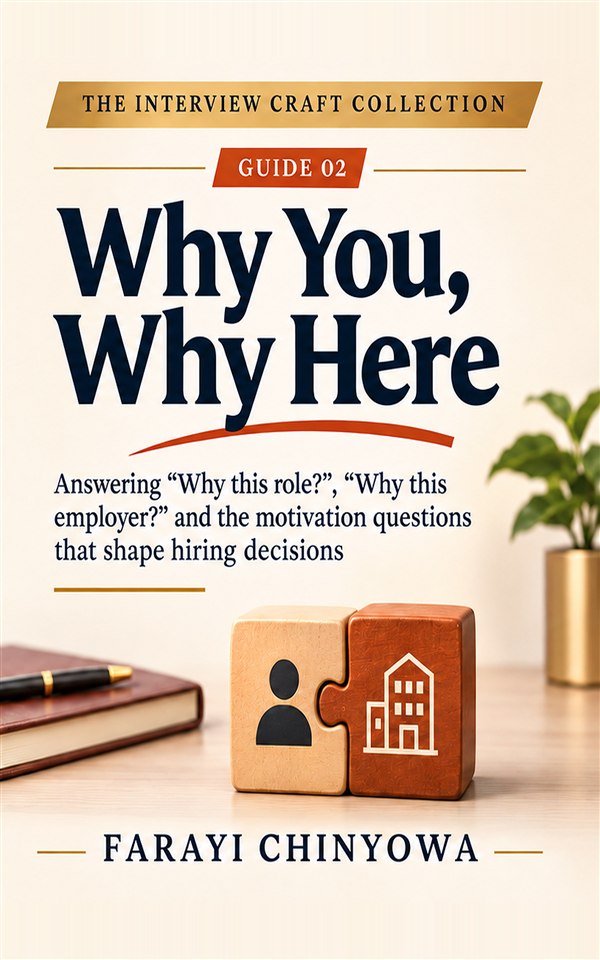
02Why You, Why Here
Answering Motivation, Fit and Career-Direction Questions
Prepare specific, researched answers about why you want the role, why the employer interests you and where your career is heading. Explain transitions honestly without relying on generic enthusiasm or unrealistic promises.
What this will help you do
Research an employer and connect its needs to your own reasons for applying.
Explain career gaps, redundancy and moves with clarity and honesty.
Practise with model answers, templates and a 14-day action plan.
Book link to be added
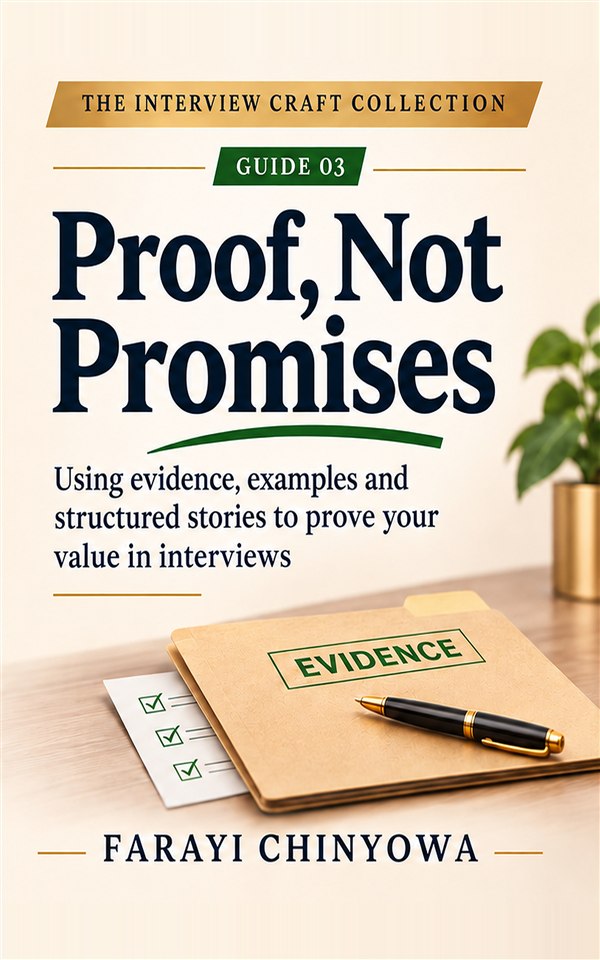
03Proof, Not Promises
Competency Questions, STAR Examples and Your Evidence Bank
Turn real experience into clear evidence for behavioural and competency questions. Build a small bank of examples and use STAR with balance, timing and reflection, without sounding as though you have memorised a script.
What this will help you do
Identify the competencies behind common interview questions.
Build a five-story evidence bank and map it to different questions.
Practise teamwork, conflict, pressure, problem-solving and achievement answers.
Book link to be added
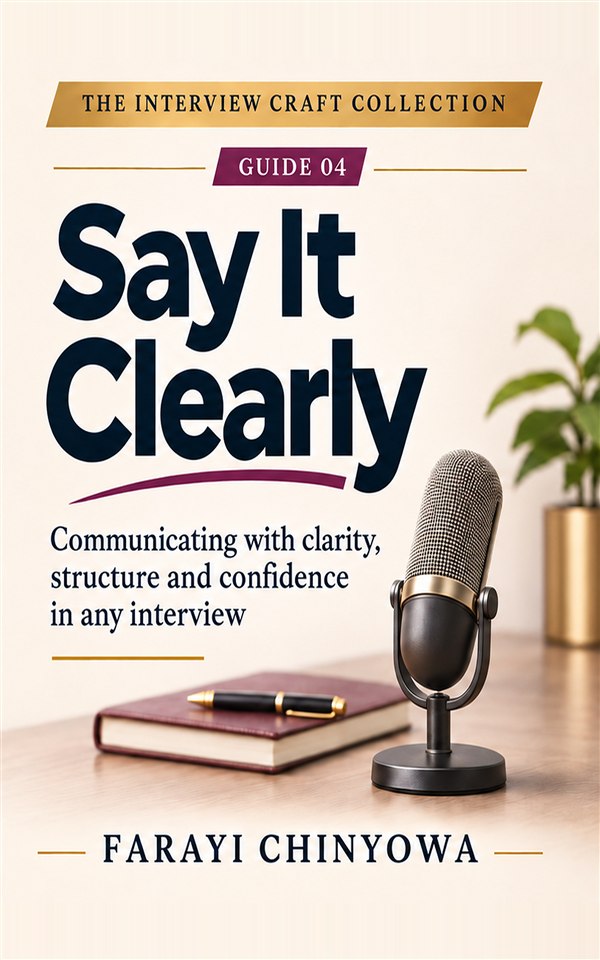
04Say It Clearly
Concise, Relevant Answers to the Questions That Matter Most
Understand what a question is testing, put your main message first and support it with relevant evidence. Timed drills help you give shorter, more focused answers without leaving out the substance.
What this will help you do
Decode eight types of interview question.
Use Point, Proof, Link to organise brief but meaningful answers.
Prioritise preparation and improve clarity through timed practice.
Book link to be added
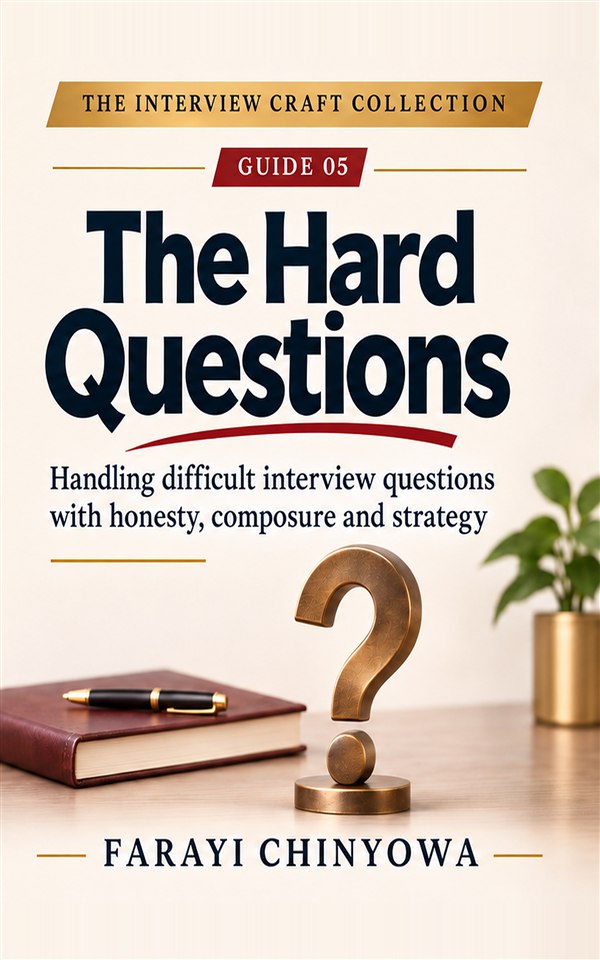
05The Hard Questions
Strengths, Weaknesses, Failure and "Why Should We Hire You?"
Approach uncomfortable questions with candour and evidence. Show what you bring, explain genuine weaknesses and discuss mistakes in a way that makes your actions and learning clear.
What this will help you do
Build a specific personal value proposition.
Structure difficult answers around candour, action, learning and the way forward.
Practise honest responses about failure, mistakes and disagreement.
Book link to be added
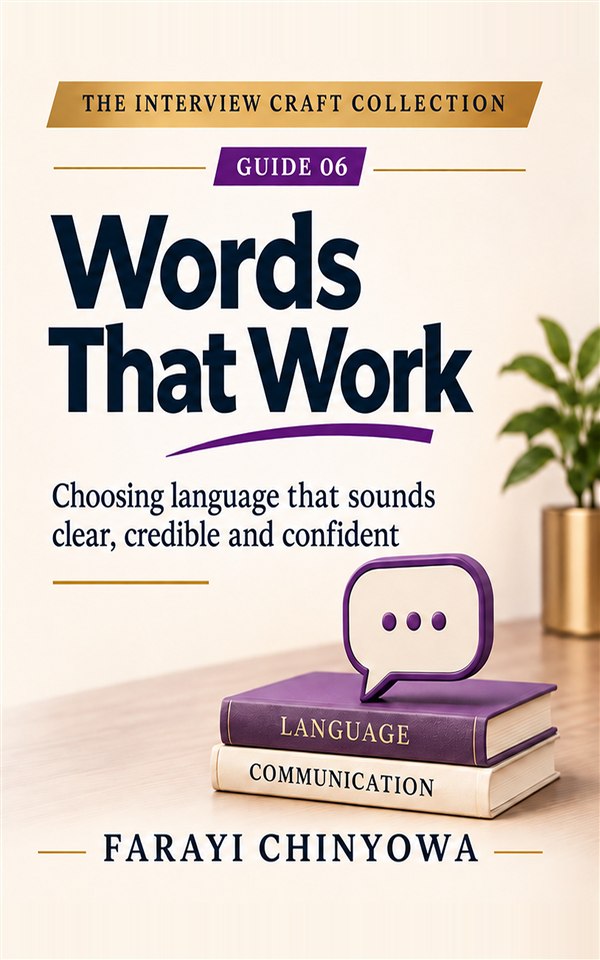
06Words That Work
Professional Language, Self-Description and Avoidable Mistakes
Choose precise, credible language for describing your experience. Before-and-after examples and adaptable phrase banks help you avoid overclaiming, vague wording and unprofessional criticism of former employers.
What this will help you do
Describe your strengths accurately and replace weak phrasing.
Talk professionally about knowledge gaps and difficult past situations.
Use rewrites and practice exercises to develop your own natural answers.
Book link to be added
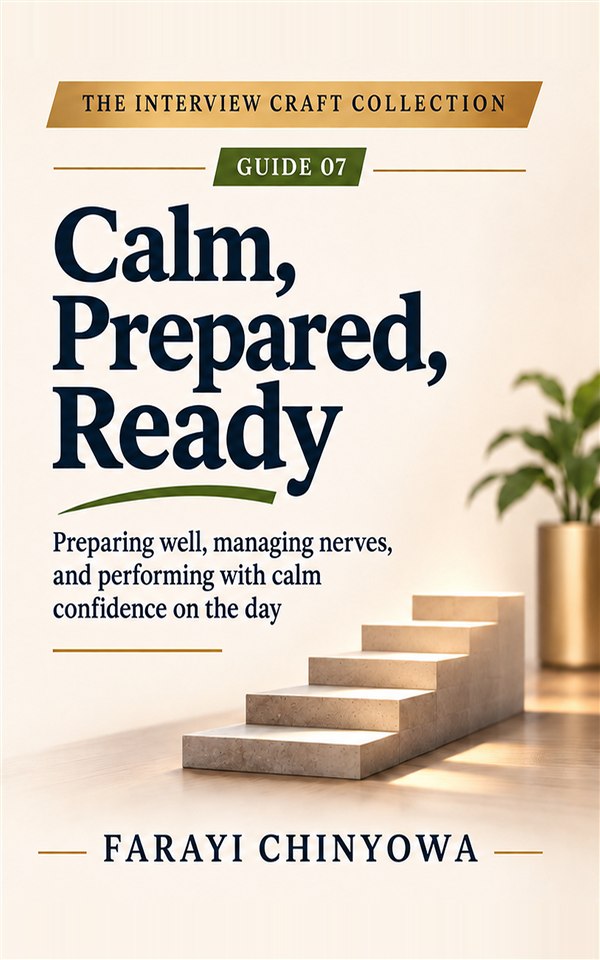
07Calm, Prepared, Ready
Research, Rehearsal and Managing Interview Nerves
Organise preparation from early research to follow-up. Use realistic mock interviews, practical checklists and techniques for managing nerves and recovering when your mind goes blank.
What this will help you do
Plan two weeks of research and rehearsal.
Run a mock interview with a scorecard and check the final 24 hours.
Prepare for in-person, video and phone interviews, including follow-up.
Book link to be added
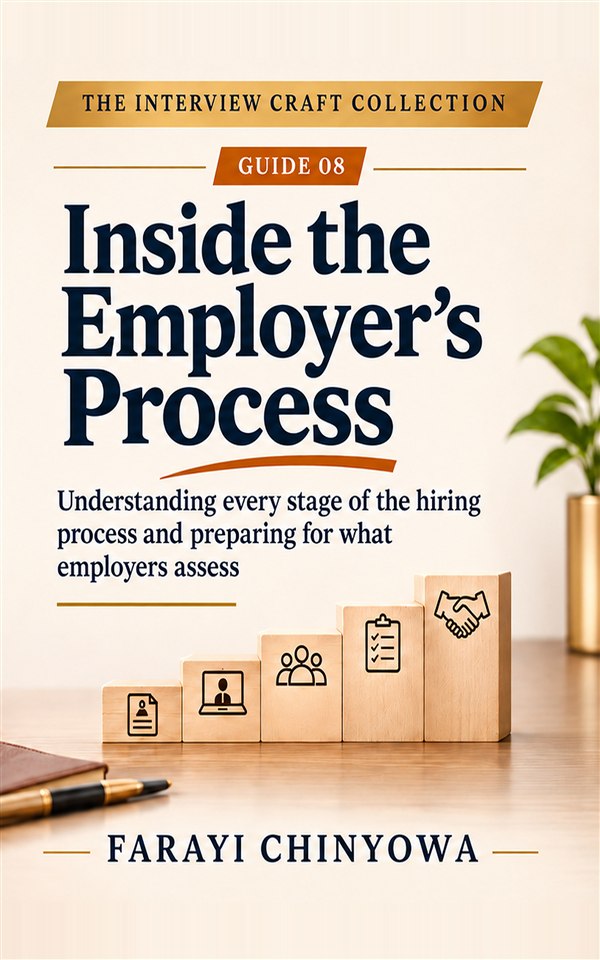
08Inside the Employer's Process
Interviews in Banking, Fintech, Cabin Crew and at Amazon
Explore examples of recruitment in banking, fintech, cabin crew and at Amazon, then use the research method to prepare for the employer you face. This is independent guidance, not employer-endorsed; always check current official recruitment information.
What this will help you do
Understand different assessment stages and what they may test.
Prepare for video interviews, situational questions and assessment days.
Map real examples to published employer principles and requirements.
Book link to be added
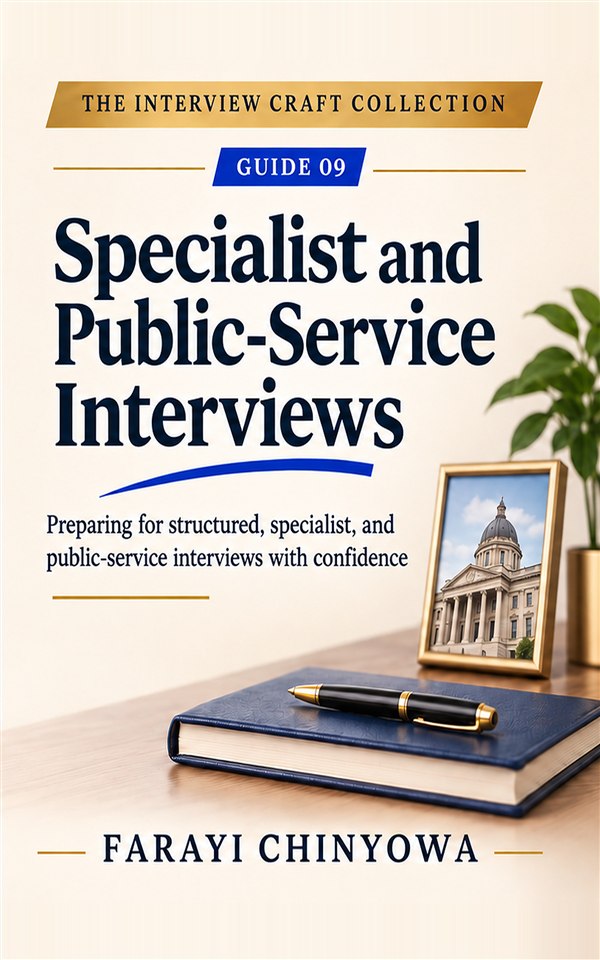
09Specialist and Public-Service Interviews
NHS, Senior Nursing, Civil Service, Technical and Management Roles
Prepare evidence for structured interviews that use values, professional standards and role-specific frameworks. Covers NHS, senior nursing, Civil Service, technical and management examples. Independent guidance: verify current official frameworks before applying.
What this will help you do
Connect truthful examples to values and published assessment criteria.
Prepare for safety, leadership, staffing and technical questions.
Practise management answers about performance, delegation, conflict and change.
Book link to be added
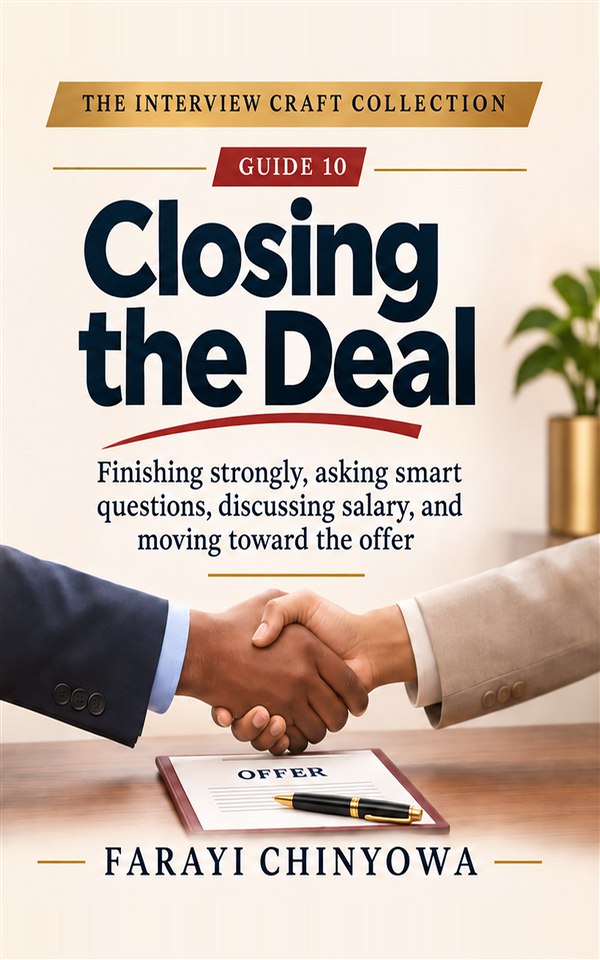
10Closing the Deal
Cover Letters, Final Questions, Salary, Your First 30 Days and Later-Career Moves
Prepare for the stages around the interview: the application, your closing questions, an offer and the start of a new role. Includes salary research, negotiation preparation and later-career job-search guidance, not personalised legal or financial advice.
What this will help you do
Improve a cover letter and prepare useful final questions.
Research pay and practise professional offer discussions.
Plan your first 30 days and approach job hunting after 50 with confidence.
Book link to be added
Elfar Bridge books and guides
How to spot fake job offers and scholarship scams
Book or guide to be added
Space for the book description.
What this will help you do
Space for the practical benefits and topics covered.
Space for the practical benefits and topics covered.
Book link to be added
Elfar Bridge books and guides
AI and digital skills
Book or guide to be added
Space for the book description.
What this will help you do
Space for the practical benefits and topics covered.
Book link to be added
Elfar Bridge books and guides
Confidence and wellbeing
Book or guide to be added
Space for the book description.
What this will help you do
Space for the practical benefits and topics covered.
Book link to be added
Prepare my book details (local preview only)
Your book details autosave in this browser only. Return using the same browser and website address. Clearing site data or using private browsing can remove them. Nothing is uploaded, published or purchased.
Loading saved book details…
Optional file: /publications/your-guide.pdf or .epub. Supply the file separately for review; entering a path does not upload it.
A title, description, benefit and valid link are needed before a book link is shown.
Turn reading into practical progress
Choose a topic and use the website guidance while the author prepares the related books and guides. No book is available until its details and link are supplied.
Bookshop links open an external shop. This website does not take payment for books. Wellbeing content is educational, not medical care.
Career direction and digital skills
Explore career options, test small next steps and choose skills worth practising. Pair your reading with a 90-day development plan and an evidence-based professional profile. As AI and IT change work, focus on demonstrable skills, critical thinking and responsible tool use, not promises of a future-proof career.
Use reading to reflect on setbacks, recognise what you can improve and set realistic goals. Prepare real examples for interviews and notice your progress through practice. These resources support learning and reflection; they do not replace qualified mental-health or medical support.
Make room for focused study, applications and rest. Choose one useful idea, practise it consistently and review what changed. Use the scholarship checklist and deadline planner to break a large application into manageable tasks instead of leaving everything to the last day.